What to Eat: The Ten Things You Really Need to Know to Eat Well and Be Healthy by Luise Light
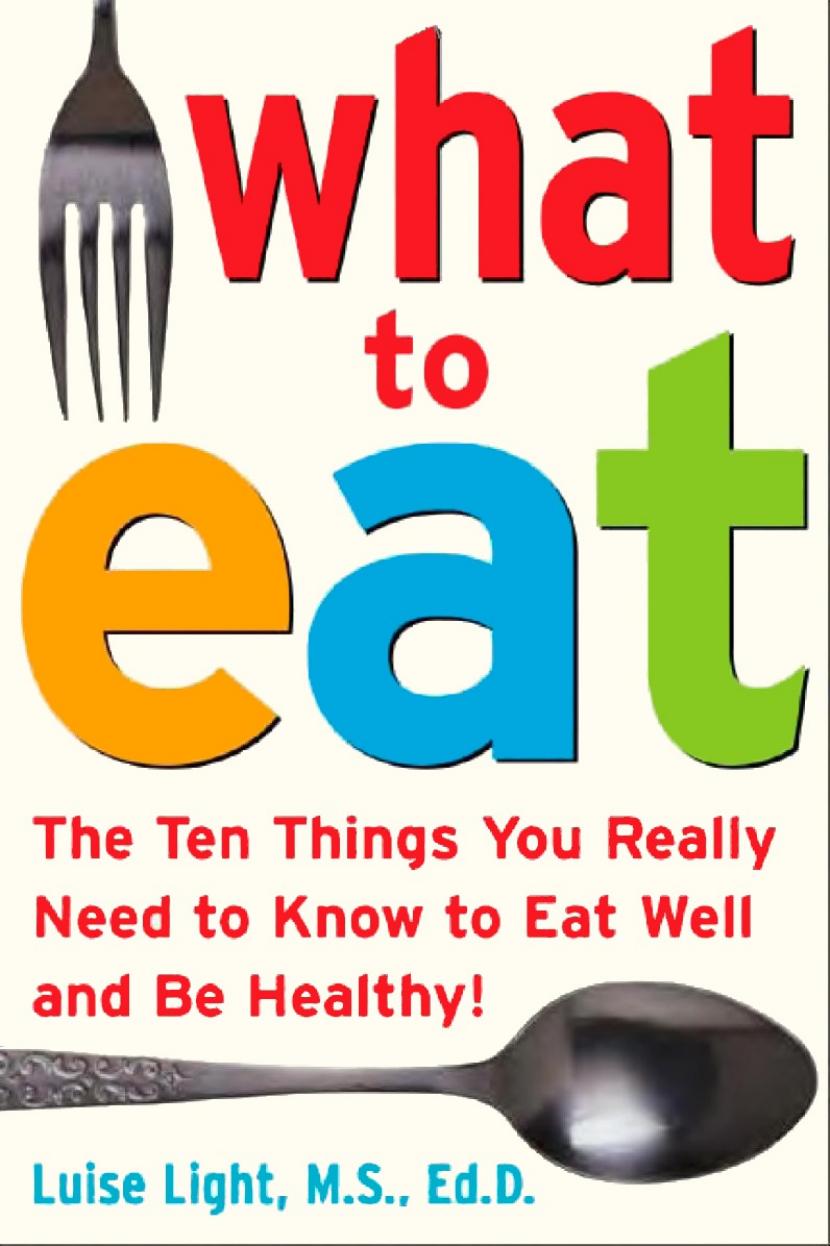
Author:Luise Light [Light, Luise]
Language: eng
Format: epub, pdf
Tags: aVe4EvA
Publisher: McGraw-Hill eBooks
Published: 2006-08-09T20:00:00+00:00
2 tablespoons sunflower seeds, cashews, almonds, walnuts, pistachios, pumpkin seeds 1 apple, small cluster grapes, 1⁄4 cup berries, 1⁄2 cup cubed cantaloupe or pineapple, 2 tablespoons raisins, 1 tangerine, 3 apricots (sulfite-free) 1–2 tablespoons nut butter with celery or carrot sticks
CHILLED SNACKS
2 tablespoons cottage cheese 1-ounce string cheese 1 deviled egg 2 tablespoons hummus with 2–3 whole-grain crackers 6-ounces yogurt with chopped fruit, dates, nuts 2 tablespoons almond or peanut butter with apple
slices 5–6 marinated, grilled tofu squares 2 slices (2 ounces) cooked turkey or chicken breast
A Week’s Worth of Healthy Eating
The upcoming seven sample menus are built around the “Ten Rules for Healthy Eating” in Chapter 2 and the Guide to Healthy Eating in Chapter 4. The menus are planned around 1,600 to 2,000 calories a day, which leaves “wiggle room” for bigger appetites to add occasional desserts or bigger portions. To lose weight, if that’s your interest, you’ll probably need to stick to about 1,600 calories for women or 1,800 calories for men. But especially when you’re dieting, you should try to eat the minimum number of servings in the Guide to Healthy Eating daily.
If you’re one of the people who find it difficult to eat all the recommended fruit and vegetable servings daily, you might want to keep a fruit and vegetable diary for a week. Make a note of the types and numbers of fruits and vegetables you eat every day. See if you are eating a rainbow of colorful fruits and vegetables each week: blue, purple, dark green, red, yellow, orange. These natural colors are associated with different powerful antioxidants. There are thousands of chemical antioxidants that protect us from toxins and metabolic wastes and boost our immunity. Some work inside of cells, some outside, and many work together synergistically. So for optimal health, you need to eat a rainbow of natural colors. Variety is your best protection! Eat different whole grains, meats, vegetables, and fruits each week, and choose natural fats, which are important to staying healthy and looking good.
Sample Menus
You can mix up these meals and snacks and substitute ingredients you like for ones you don’t, as long as they are roughly comparable in protein, carbohydrate, and fat. Look up their food values in a book of food counts or use a food calculator on the Internet. Use these menus as models when you’re planning what to eat out or take to work. Use them, too, when planning provisions for a long road trip. Recipes for dishes marked with an star (*) are in Chapter 6.
Don’t leave out anything, even salad dressing. You need some fat in your diet. Don’t worry, real olive oil won’t make you fat as long as you don’t overdo it. Low-fat dressings often have more sugars and carbohydrates, which are not great tradeoffs for weight-conscious people.
SUNDAY
Brunch
Smoothie: 1 cup milk with 1⁄2 cup unsweetened,
frozen berries, 1⁄2 banana 1 poached egg 1⁄2 whole-wheat bagel 1 tablespoon cream cheese 2 orange wedges Water, tea, or coffee
Dinner
4-ounces roast chicken, without the skin
Download
What to Eat: The Ten Things You Really Need to Know to Eat Well and Be Healthy by Luise Light.pdf
This site does not store any files on its server. We only index and link to content provided by other sites. Please contact the content providers to delete copyright contents if any and email us, we'll remove relevant links or contents immediately.
Nutrition for Sport, Exercise, and Health by Spano Marie & Kruskall Laura & Thomas D. Travis(3788)
Nutrition for Sport, Exercise, and Health by Marie Spano & Laura Kruskall & D. Travis Thomas(3736)
The Sprouting Book by Ann Wigmore(3596)
Flavor Flours by Alice Medrich(2870)
Superfood Smoothie Bowls: Delicious, Satisfying, Protein-Packed Blends that Boost Energy and Burn Fat by Chace Daniella(2486)
Memory Rescue by Daniel G. Amen(2428)
Dirty Genes by Ben Lynch(2319)
The Bad Food Bible by Aaron Carroll(2280)
Genius Foods by Max Lugavere(2224)
The Poisoner's Handbook by Deborah Blum(2144)
Good Calories, Bad Calories by Gary Taubes(2114)
The Main Street Vegan Academy Cookbook by Victoria Moran(2092)
The I Quit Sugar Cookbook by Sarah Wilson(2047)
Core Performance Essentials by Mark Verstegen(2016)
Memory Rescue: Supercharge Your Brain, Reverse Memory Loss, and Remember What Matters Most by Amen Dr. Daniel G(1982)
Big Girls Do It Stronger by Jasinda Wilder(1968)
Android App Development by Franceschi Hervé J.;(1847)
Sugar Crush by Dr. Richard Jacoby(1805)
Dr. Colbert's Keto Zone Diet by Don Colbert(1657)
